Showing posts with label Surprising Church History on Sexuality. Show all posts

Sunday, April 25, 2021

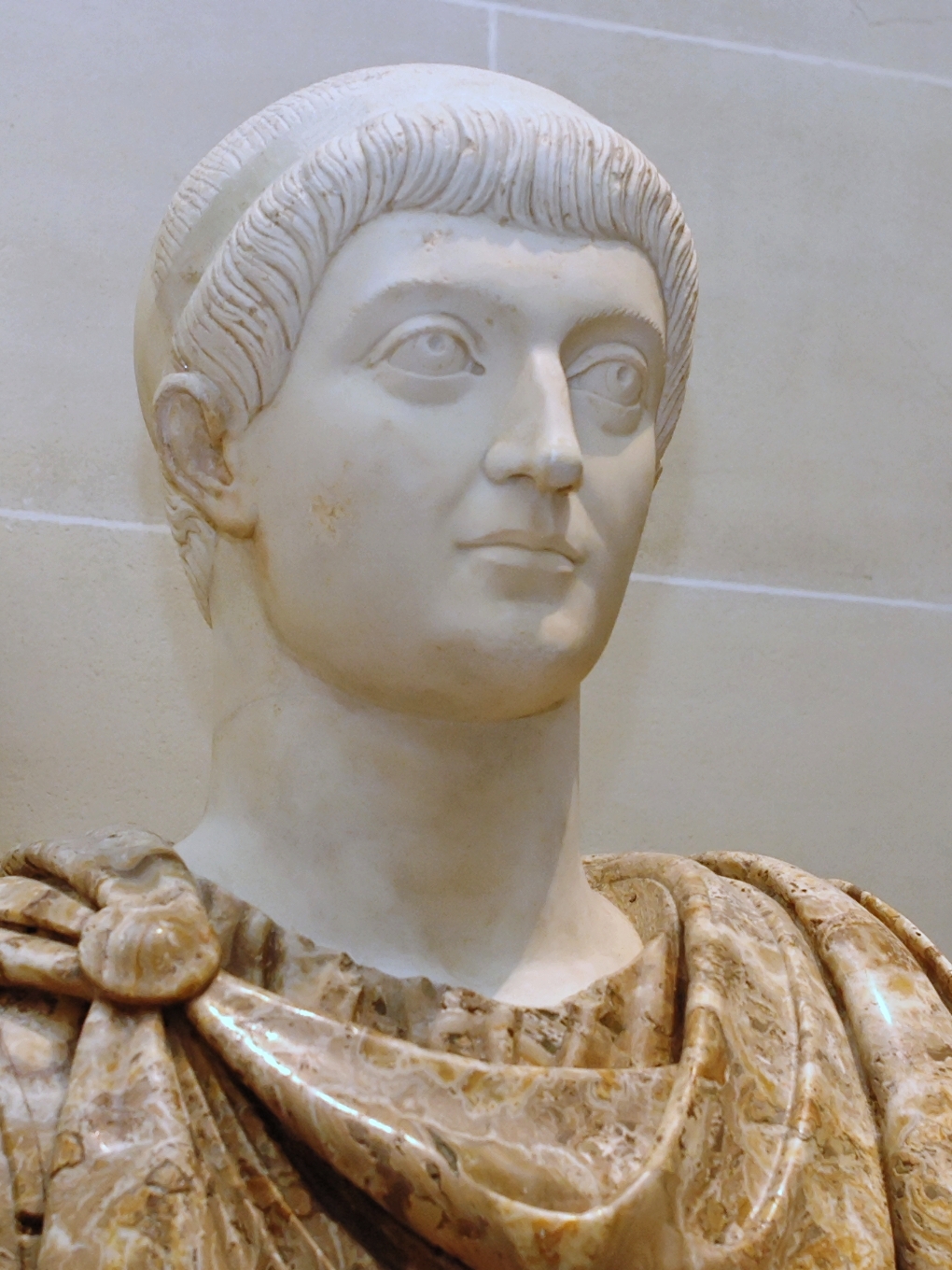
Valentinian's Imperial Threesome

Valentinian is the Christian Roman Emperor said to have engaged in Polygamy, below is Copy/Pasted from his Wikipedia Page.

Socrates Scholasticus gives an interesting account in his Historia Ecclesiastica of Valentinian's marriages, that has inspired some to call this emperor polygamous. According to the text: the empress Justina[53]

became known to Marina Severa, wife of the emperor Valentinian, and had frequent dialogue with the empress, until their intimacy at length grew to such an extent that they were accustomed to bathe together. When Severa saw Justina in the bath she was greatly struck with the beauty of the virgin, and spoke of her to the emperor; saying that the daughter of Justus was so lovely a creature, and possessed of such symmetry of form, that she herself, though a woman, was altogether charmed with her. The emperor, treasuring this description by his wife in his own mind, considered with himself how he could espouse Justina, without repudiating Severa, as she had borne him Gratian, whom he had created Augustus a little while before. He accordingly framed a law, and caused it to be published throughout all the cities, by which any man was permitted to have two lawful wives. The law was promulgated and he married Justina, by whom he had Valentinian the younger.

— Socrates Scholasticus, Historia Ecclesiastica, IV.31

Now Wikipedia goes on about how scholars doubt the veracity of this claim, citing sources from a Century later who instead say Severa was exiled before he married Justina, and referring to the lack of evidence of this Law legalizing Polygamy.

Independent verification of this Law probably vanished because later Emperors expunged it.  What we now know of Roman Law largely comes through the compilations and reforms of Theodosius and Justinian.  

It's also theorized that this comes from someone wanting to smear Justina for her perceived later support of Arianism.  But this is an odd way to go about calling her a Slut.  Also Socrates Scholasticus is known for his lack of interest in demonizing Heretics, he is so kind to the Novatians that many have assumes he was one, but then others point out that he showed the same fairness to the Arians.

What fascinated me here is that this really isn't just an example of standard Patriarchal Polygyny.  It starts with Severa seeing Justina naked and getting turned on in-spite of being a Woman.  This wasn't a strictly Het plural marriage, this was a True Threesome.

Valentinian is also an interesting Emperor for his Domestic Economic Policies as well.  A lot of the negative things said about him are from Senatorial Class historians, who indeed still dominated the writing of Roman Imperial history even during Christianization.  Valentinian made reforms to help the Poor including providing them with Healthcare.  Even though during this era The Church was already starting to lose it's Anarcho-Communist roots, Valentinian was still, if we tried to force modern political terms on the era, at least a Social Democrat.

Scholars also like to doubt the alleged Arianism of Valens because of Valens' closeness to Valentinian who was his brother.  But Valens definitely had a different economic philosophy then his brother being much more fiscally Conservative.  Brothers can disagree on Religion just as easily if not more so then they do Economics.  That forcing an Arian Bishop on the Arabs was the reason for Mavia's revolt is pretty hard to deny.

This also kind of repeats the situation of the children of Constantine.   Now the fact that in both cases the Nicene got the West while the Arian got the East might make one suspect all Four Emperors were just pandering to the popular winds of their populations.  But often popular opinion is influenced by the rulers.   And to me the evidence shows that Arianism wasn't popular with the common people in most of the East, just among elites in Bithynia.

Sunday, April 19, 2020

Papirius and Melito of Sardis

Polycrates of Ephesus in the letter he wrote to Bishop Victor of Rome as it is preserved for us by Eusebius of Caesarea says something interesting when he gets to Sardis.
"or the blessed Papirius, or Melito the Eunuch who lived altogether in the Holy Spirit, and who lies in Sardis, awaiting the episcopate from heaven, when he shall rise from the dead?"
I should remind people that the word Eunich in antiquity was not used only of people literally castrated, there is a lot of evidence that "Born Eunuchs" were anyone assigned male at birth who was pretty much incapable of being sexually aroused by women.  That can apply to a number of modern Sexual/Gender identifies, Gay Cis-Men, Straight Trans Women, Asexuals and more.

Now I think a relationship between these two is implied even in Eusebius wording here, but the grammar seems kind of awkward like someone tried to de-emphasize something.

I definitely feel Eusebius version of this letter is slightly corrupted, maybe not by himself but rather by how it was passed down in Rome before it got to him.  Chiefly I theorize that the name of "John" was not originally in this letter, that will possibly be the subject of a future post.

As far as this section goes, here is my theoretical reconstruction.
"or the blessed Papirius and Melito the Eunuch who lived together in the Holy Spirit, and who lie in Sardis, awaiting the episcopate from heaven, when they shall rise from the dead?"
I didn't change that much at all really.

Monday, October 28, 2019

Emperor Constans, The Homosexual Champion of Trinitarian Christianity.

There are numerous forms of Christianity today that for one reason or another feel The Church marrying The Roman Empire was overall a net negative.  And I myself am still largely of that way of thinking.  But I also understand the nuances and complexities of Ancient History enough that I really can't agree with how strongly these traditions tend to demonize Constantine himself.

Constantine wasn't perfect, but neither was David.  I oppose human Monarchy on principal, but if it's possible for Ancient Israel to have relatively good Kings, and for a Pagan King like Cyrus to be spoken of very positively in Scripture, then it's possible for some Roman Emperors to be at least okay.

I think the Milvian Bridge Vision story is fictional, but I think that because I think he was raised a Christian by his mother Helena (who I theorize descended from the Abgars of Osroene) and the conversion myth simply made a better story.

Some websites talking about the History of Imperial Christianity's persecution of Jews will claim it started with Constantine himself, but these claims are quite vague and unsourced.  The truth is the Edict of Milan granted Freedom of Religion to all religions, and Constantine stuck by that, the reason some accuse him of embracing the Arian Heresy in his last days is mainly just because he wasn't persecuting them.

But I'm not making this post to talk about Constantine, instead my interest today is the youngest of his three sons.

Constantine wanted his sons and his nephews to inherit The Empire together, but after he died in 337 AD the nephews were massacred.  You'll often see this incident described as if all three of Constantine's sons were equally culpable in it, but when this happened two of them were already over 20 while Constans was only 13 or 14, so clearly one is less morally accountable for what happened then the others.

The firstborn son Constantine II inherited France, Britannia, the Iberian Peninsula and a little bit of North Africa, the Straight of Gibraltar basically.  Constantius II got what we would call the Eastern Empire.  And the youngest Constans got Italy, Dalmatia and most of North Western Africa.  But because Constans was still a minor Constantine II was also his protector.

Constantius II embraced the Arian Heresy (though some will argue he was really more Semi-Arian) and proceeded to depose and exile Athanasius.  He was also the first Christian Emperor to use Caesar's sword against the Jews, indeed his persecution of The Jews provoked their first open rebellion against the Empire since the defeat of Bar-Khocba.  It was also under him that oppression of the Pagans began.

Constantine II felt like he should have got more then he did as the firstborn, and when Constans became of legal age he basically tried to kill him but it failed and he died in 340 AD resulting in Constans having the entire West.

Constans passed a law banning some Pagan Sacrifices, but he was Tolerant of the Jews.  And even that Law agaisnt Pagan Sacrifices was made in 341 when he was still not 20 yet.

He championed the Nicene faith creating conflict with his brother in the East.   

Constans was a Homosexual, which created some conflicts even with the Nicene Clergy he supported since Platonist Homophobia was already taking hold in the Greco-Roman Church.  And I think this is the sole reason some accounts of this Emperor speak badly of him.

And of course like many demonized Homosexuals there was a desire to paint him as a "Pederast", but those who applied that Trope to Constans seem to have overlooked that he never even lived to see 27.

A Usurper's rebellion against him resulted in his death in February of 350 AD, Constantius II then went to war against the Usurper and for a time ruled the Entire Empire.

Later about 380 is when the Prophecy attributed to the Triburtine Sybil is believed to have first emerged, the earliest form of the Last Roman Emperor tradition.  I find it interesting that in this original from it was the name Constans not Cosntantine that was given to this future Emperor.  I think the common people of Nicene Christianity continued to view Constans as a Hero even as the establishment sought to either smear or forget about him.

While Tyranny in the Imperial Church began with an Arian Emperor, later Nicene ones would prove no better.  Theodosius (both I and II) and Justinian are the ones far more worth condemning as the Tyrants who turned The Church into an instrument of oppression.

Monday, April 30, 2018

Aulus Pudens and 2 Timothy 4:21

I've become fairly convinced of the theory that the Pudens and Claudia of 2 Timothy 4:21 are the same as Aulus Pudens and Claudia Rufina mentioned by the poet Marital.  I mentioned this in I don't think Nero Persecuted Christians.

Now that belief often gets tied into British Israelism or other ways to try and develop a very Britannia centrist view of History, of Anglicans and other English Speaking Protestants attempting to argue the British Church is the True Church.  Those kinds of views I don't agree with.  But what I do believe is that very early on The Gospels reached every corner of the then known world.  And so my believing it reached the British Isles also ties into my desire to talk about it's history in East Asia, Africa and Arabia, subjects I'll be posting more on in the future.

The thing is, a lot of the people who think Aulus Pudens was Saint Pudens are very Conservative Christians.  So that's why I want to point out an implication of this identification they've overlooked.

Aulus Pudens was Bisexual, Marital records his marriage to Claudia Rufina, but also records his passions for young male slaves.

And that can lead us to another potential answer to the objection that Pudens and Claudia aren't right next to each other in 1 Timothy 4:21.  Claudia Rufina was from Briton, and Julius Caesar records that the Celtic Britons practiced Polyandry.  And believe it or not examples of Polyandry occurred in Rome as well.  There is a common assumption that Polyandry can't ever by compatible with Biblical Laws, only Polygyny can.  But that's derivative of assumptions about the Pre-Marital Sex being a Sin which I've already deconstructed.  And it's easy to make an argument for Fraternal Polyandry from the reasoning behind the Levirate Marriage.  So maybe what Marital left out is that Pudens wasn't the only husband of Claudia.

Thursday, April 12, 2018

Perpetua and Felicity

In light of KyleKallgrenBHH and his significant other's recent video lamenting the lack of Queer Women of Color representation, their review of The Watermelon Woman. And my desire to eventually spend more time on this blog deconstruction the European bias on how we view Church History.  I figure I should add my Surprising Church History on Sexuality series a post about Perpetua and Felicity.

Wikipedia Page
Passion_of_Saint_Perpetua,_Saint_Felicitas,_and_their_Companions

 Or course I don't have much to say that hasn't been said already.  So here are some Links.

http://qspirit.net/perpetua-felicity-same-sex-couples/

https://queeringthechurch.wordpress.com/tag/perpetua-and-felicity/

http://queering-the-church.blogspot.com/2012/03/ss-perpetua-and-felicity-martyrs-0703.html

The speculation of Montanism on the Wikipedia article I think is a product of Secessionists who want to think Montanists were the only Contuniations in the Early Church.  When in fact it's been repeatedly noted the objectors to Montanus were not denying the continuance of the Gift of Prophecy but criticism them for how they went about it.

The images below are taken from the first article.

Monday, January 16, 2017

Pre-Islamic Arabs were an important part of Early Church History

The history of Arabia and Christianity I think ultimately begins with the theory I proposed last year that The Magi came from Yemen rather then Persia.

Acts 2:11 confirms Jews of Arabia were at Pentecost.

Perhaps the first Arab Christian was Agabus, the Prophet mentioned in Acts 11.  Some have argued his name is neither Hebrew or Aramaic or Greek but makes most sense as being Arabic.  

Paul in Galatians says he traveled to Mt Sinai in Arabia.  But that doesn't quite tell us anything about Arabs who were early Christians.

In the New Testament itself the Arabian presence in The Church is small.  But in the coming centuries their influence will be quite important.  But constantly overlooked because of the Greek and Roman biases in how Early Church history was recorded and is still studied.

The Petra based Kingdom wasn't the only Nabatean Kingdom.  The people of Osroene were also Nabateans.  The Nabateans came from Nebojath/Neboiath the Firstborn Son of Ishmael.  Many historians doubt the traditions of Abgar V becoming a Christian, and on that they are probably right right.  But there is little doubt that either Abgar VIII and/or Abgar IX was a Christian.  

Philip The Arabian was a Roman Emperor of the first half of the Third Century.  He was born in Arabia.  There is a controversial belief that I have become convinced of that he was actually the first Roman Emperor to be a Christian, even before Constantine.

Eusebius refers to both Abgar and Philip as Christians but neglects to mention that they were both Arabs.

I personally have a theory that Helena, the mother of Constantine, born about 250 AD, may have been a descendant of an Abgar of Edessa.  But that may be for another post some day.

According to an ancient Syraic manuscript, six of the Bishops at the Council of Nicaea were from Arabia.

The Ghassamid and Lakhmid kingdoms both formed around the late 3rd and early 4th centuries, and both became Christian kingdoms pretty early on.  The former mainly in modern Jordan, but included the Golan Heights and a little bit of Syria.  The latter in parts of modern Iraq west of the Euphrates river.  They and the Tanukhids were among many Joktanite tribes of Yemen who had migrated north following the destruction of the Ma'arib Damn and the conquests of the Himyar Kingdom.  [I've actually read different accounts not on if the Tanukids came from Yemen or not.]

From the Tanukhids came Queen Mavia(Māwiyya), who reigned from 375-425 AD.  There is disagreement over whether she was raised a Christian or converted.  She long before Muhammad had an ambition of creating a united Arab Kingdom.  Under her a Bishop named Moses was appointed the first Arab Bishop of the Arabs.

What's interesting is how her rebellion was specifically pro Nicene-Christianity against an Arian Emperor.   Makes all these Muslim apologists today demonizing the Council of Nicaea sadly ironic.  Because the heritage of Islamic Arabia included saving the East form the Tyranny of Arianism.

Heretics also existed among Arab Christians.  Like Collyridianism, a group possibly mentioned in The Koran.  And Theophilus The Indian spread Heterousian Arianism in Arabia in the 4th Century.

The Banu Judham are said to have been Christians before Islam.

The Banu Kalb was also important.

The Kingdom of Kinda dominated much of Arabia till the 6th Century.  

The Christian community of the Najran region is also worth looking into.

Abraha was not an Arab himself, but he had an impact on 6th century Arabian history.

The Lakhmid Kingdom would exist until just before the birth of Islam as I'll discus below.  The Ghassamid Kingdom lasted a little longer and was eventually conquered by the Muslims.

I want to mention the Encyclopedia of Pleasure which is a collection of Arabic stories involving Lesbians that have been preserved.  One of the stories is set before Islam, during the lifetime of Muhammad but before he had his first "vision" at age 40 in 610 AD.  Because at least one of the two women in the story would have been a Christian.
One of the stories told in the book is a story about the first Arab lesbian Hind Bint al-Khuss al-Iyadiyyah, known as al-Zarqa’, and her love to a Christian woman Hind Bint al-Nu`man, who was the daughter of the last Lakhmid king of Hira in the 17th century. When Hind Bint al-Khuss al-Iyadiyyah died, her faithful lover "cropped her hair, wore black clothes, rejected worldly pleasures, vowed to God that she would lead an ascetic life until she passed away…" She even built a monastery to commemorate her love to al-Zarqa'
  Sahar Amer (2 May 2009). "Medieval Arab Lesbians and Lesbian-Like Women' Journal of the History of Sexuality
The Lakhmid king in question is al-Nu'man Ill ibn al-Mundhir.  From what we know historically he did have a daughter who's name isn't mentioned.
Nevertheless, according to creditable historical accounts, when Khosrau II demanded Nu'man's Christian daughter as part of his extensive harem, he refused the Shah's demand. In response, Khosrau II had him crushed by elephants; however, according to a Syriac chronicle, Khosrau invited Nu'man to a feast where he was dishonored and trapped;
 Philip De Souza and John France, War and peace in ancient and medieval history, p. 139; Khuzistan Chronicle 9
Interesting that he was so determined not to marry his daughter off in a back then perfectly normal political marriage.  And we have a completely different tradition that his daughter was a very Monogamous Lesbian.  I suspect the story may well be historical.

Some historians have even speculated that a larger percentage of the family Muhammad came form then is usually assumed was either Christian or Jewish.  As is, his family is known to have included at least one Christian.

Isaac of Nineveh (613-700) was an Arab born in Eastern Arabia.

Saturday, June 13, 2015

Eugenia of Rome

Eugenia of Rome
she was converted by and martyred with Protus and Hyacinth, her Chamberlains, during the persecution of Valerian. She was said to have been the daughter of Philip, "duke" of Alexandria and governor of Egypt. She had fled her father's house dressed in men's clothing and was baptized by Helenus, bishop of Heliopolis. She later became anabbot, still pretending to be a man. As the story goes, while she was an abbot and still dressing like a man, she cured a woman of an illness, and when the woman made sexual advances, which she rebuffed, the woman accused her publicly of adultery. She was taken to court, where, still disguised, she faced her father as the judge. At the trial, her real female identity was revealed and she was exonerated. Her father converted to the faith and became Bishop of Alexandria but the emperor had him executed for this. St. Eugenia and her remaining household moved to Rome where she converted many, especially maidens, but this did not prevent their martyrdom. Protus and Hyacinth were beheaded on September 11, 258, and Eugenia followed suit after Christ appeared to her in a dream and told her that she would die on the Feast of Nativity. She was beheaded on December 25, 258.
"She" continued dressing and living as a Male even after her conversion to Christianity.  Very interesting.

Wednesday, October 15, 2014

Female Partnerships in The New Testament

Romans 16:12 says "Salute Tryphena and Tryphosa, who labour in the Lord."  Both of those are universally in all Greek and English texts female names.  Both the use of the word "labour" and the context and function of Romans 16 confirm that Tryphaena and Tryphosa should be seen as missionaries.

Paul's usage of only one verb for the two means they're a missionary couple.  The other four missionary couples mentioned are all one male and one female.  Priscilla and Aquila, Andronicus and Junia, Philologus and Julia are the first three, the nature of how they're related isn't specified.  But we know from elsewhere in the New Testament like Acts that Priscilla and Aquilla are husband and wife.  The Fourth is Nereus and his sister.  With the Male-Female pairs it is inferred that if how their related isn't mentioned they are probably husband and wife.

Philippians 4 mentions Euodia and Syntyche.

When he describes the ministry of Euodia and Syntyche, Paul uses a couple of the same terms he had previously applied to Timothy and Epaphroditus.  Paul writes that Euodia and Syntyche had contended together with him “in the Gospel”.  Earlier in the same letter, Paul had also described Timothy as someone who had served with him “in the Gospel” (Phil. 2:22).  Paul goes on to refer to Euodia and Syntyche as his “fellow-workers“.  Earlier, Paul had also referred to Epaphroditus as his “fellow-worker” (Phil. 2:25).  So, according to Paul, the ministries of the women Euodia and Syntyche were comparable to the ministries of the men Timothy and Epaphroditus.

 Early church bishop and theologian, John Chrysostom (c349-407), believed that Euodia and Syntyche were leaders in the Philippian church.  Moreover, he compared them to Phoebe, a woman minister (diakonos) in Cenchrea (Rom. 16:1-2).  In his 13th Homily on Philippians he wrote:
 These women [Euodia and Syntyche] seem to me to be the chief of the Church which was there, and [Paul] commends them to some notable man whom he calls his yokefellow; [Paul] commends them to him, as to a fellow-worker, and fellow-soldier, and brother, and companion, as he does in the Epistle to the Romans, when he says, I commend to you Phoebe our sister, who is a minister of the church at Cenchrea (Romans 16:1). (Homilies on Philippians, 13)
It is commonly assumed the conflict Paul alludes to is between the two women. However comparing to other Paulian passages I feel the disagreement is between Paul himself and the two women.  Like First Corinthians 1:10.  Earlier in Philippians 1:14-17 Paul refers to others preaching the Gospel in competition to himself.  In verse 18 we see that Paul rejoices at this.  Another perspective has been offered also.
In Philippians 4:2, Paul urged Euodia and he urged Syntyche to, literally, “think the same thing”.  That Paul addressed Euodia and Syntyche personally and individually, reinforces the idea that these women had considerable influence in the Philippian church and probably were leaders.

Were Euodia and Syntyche quarrelling?  This is the assumption most people have, and many Bible versions convey this assumption in their translations.  Paul, however, does not say, or intimate, that Euodia and Syntyche were quarrelling.  Paul simply urged each of them (literally) “to think the same thing in the Lord”.  “Think” (phroneō) is a key word in the letter to the Philippians.  In the preceding verses in Philippians, Paul had been encouraging mature people to have the same thinking as himself – that of reaching out for the goal spiritual perfection (Phil. 3:14-15).  It could well be that Paul is carrying on this thought and, using almost identical language (in the Greek), is saying, “I encourage Euodia and I encourage Syntyche to have the same thinking in the Lord ” that of aspiring to spiritual maturity and perfection (Phil. 4:2).

Chrysostom did not see any sign of a quarrel in Paul’s plea to Euodia and Syntyche; he saw only praise from Paul and wrote: “Do you see how great a testimony he [Paul] bears to their virtue?”  (Homilies on Philippians, 13)
Phillipi was a region where Women were more independent then most parts of Greece at this time.  Acts 16:12-17 even calls attention to this.

I think this information should open people's eyes somewhat.  This pattern of Female Partnerships can possibly be expanded into Extra-Biblical examples, where possible evidence of Homo-Romantic affection exists but is frequently ignored. The acts of Paul and Thecla has another Tryphena sponsor Thecla.  Perpetua and Felicity believed to have been Martyrs in 203 AD  Artemilla and Eubula in the Apocryphal acts of Paul.  Maximilla and Iphidamia in the Acts of Andrew.  Of course there are also themes in these apocryphal stories that reflect some of the problematic Misogynist attitudes of the developing Church as well.  Especially in the Acts of Thomas which features Mygdonia, Marcia and Tetria. 

Friday, October 10, 2014

Homosexuality and Church History

Prudish attitudes have always existed, and plenty of quotes among the Church Father show the seeds of Homophobia existed among them.  The Church Fathers were of course also Anti-Semitic which is why they had to be Post-Trib.

Still, some quotes used by "Conservatives" to back up their view that Homosexuality has always been consistently condemned are misused just as The Bible verses are.

The Didache is considered the oldest Christian writing not part of the Canon.  The passage from it cited as condemning Homosexuality is.
"You shall not commit murder, you shall not commit adultery, you shall not commit pederasty, you shall not commit prostitution, you shall not steal, you shall not practice magic, you shall not practice witchcraft, you shall not murder a child by abortion nor kill one that has been born." - Didache 2:2
The basis here is the use of "pederasty".  That term is NOT for any and all Homosexual acts however, it refers specifically to an older Man with a much younger Boy.  A Boy who'd be a Minor by modern legal standards and also probably ancient ones too.

The quote from Polycarp's epistle to the Corinthians that is cited against homosexuality from section 5 uses the same two words as 1 Corinthians 6.  Yet one translation chooses to render them "nor the passive homosexual partner, nor the dominant homosexual partner", which I explained elsewhere there are far better ways to express that.

The Epistle of Barnabas is a popular piece of Apocrypha.  Some people will cite it as if it actually was written by Barnabas the friend of Paul (Conservopedia wrongly dates it 74 AD).  But that is impossible, it was clearly written during The Bar Kochba Revolt, when The Jews were planning to rebuild The Temple.  This is why it's also the first Christian writing to advocate for a form of replacement theology.

On the Homosexuality subject it is quoted as saying "You shall not commit prostitution; you shall not commit adultery; you shall not be a corrupter of youth".  Again, it's a reference to specifically Pederasty that people want to cite as if it and Homosexuality were inseparable.  Which is what lots of modern Christian Homophobes argue.  But that is not how Doctrine should be built (if we were building doctrine on this extra-Biblical text at all, which we shouldn't).
...to expose newly-born children is the part of wicked men; and this we have been taught lest we should do anyone harm and lest we should sin against God, first, because we see that almost all so exposed (not only the girls, but also the males) are brought up to prostitution. And for this pollution a multitude of females and hermaphrodites, and those who commit unmentionable iniquities, are found in every nation...And there are some who prostitute even their own children and wives, and some are openly mutilated for the purpose of sodomy; and they refer these mysteries to the mother of the gods. - Justin Martyr, First Apology 27 (A.D. 151).
This is clearly about Pagan ritual prostitution.
All honor to that king of the Scythians, whoever Anacharsis was, who shot with an arrow one of his subjects who imitated among the Scythians the mystery of the mother of the gods . . . condemning him as having become effeminate among the Greeks, and a teacher of the disease of effeminacy to the rest of the Scythians. Clement of Alexandria, Exhortation to the Greeks 2 (A.D. 190).
Again, more of what I said above, and of what I said about Malakos in my main Homosexuality dissertation.
For your gods did not even abstain from boys, one having loved Hylas, another Hyacinthus, another Pelops, another Chrysippus, another Ganymede. - Clement of Alexandria, Exhortation to the Greeks 2 (A.D. 190).
Again, he said "boys" not "men".

There certainly were attitudes among the Church Father against any same sex relations.  But remember, these are the same people out of whom came The Catholic Church.

In terms of the references that specifically bring up Lesbians.  I feel it can be well demonstrated that the Anit-Lesbain attitudes some Church Fathers had was an example of then endorsing the prevailing attitudes of the Pagan Greco-Romon world, rather then rebelling against it.  A few Non-Christian scholars of Lesbian history have spoken on this subject, though accepting the wrong view that Lesbianism is addressed in Romans 1.  Like Bernadette Brooten.
Drawing upon a broad range of sources from the Roman world, I illustrate in my forthcoming book that early Christian views of female homoeroticism closely resembled those of their non-Christian contemporaries. Some prior researchers have tended to take an apologetic pro-Christian stance and to see early Christian sexual values as of a higher moral level than those of their environment. Other researchers have viewed early Christians as proto-Puritanical and repressive in contrast to the more sex-positive pagans around them. My research is more in line with those researchers who see a continuity between non-Christian and Christian understandings of the body. A focus on female homoeroticism makes this continuity clearer than would a focus on male homoeroticism, since nearly all extant sources on sexual relations between women condemn such relations, whereas some Roman-period, non-Christian sources express tolerance toward male-male sexual relations, which masks the similarity between Christian and non-Christian understandings of masculinity. Because the reasons for condemning female homoeroticism run deeper than the reasons for promoting marriage or celibacy (on which there was much debate in the Roman world), there is a cultural continuity of views of female homoeroticism.
Although ancient Christian writers resembled their non-Christian contemporaries in their views on erotic love between women, both groups differed from our own culture in their overall understanding of erotic orientation. Whereas we often dualistically define sexual orientation as either homosexual or heterosexual, they saw a plethora of orientations. (When we in the late 20th century think about it, we also recognize bisexuals and transsexuals, leading us to speak of a spectrum, rather than a bifurcation.) Their matrix of erotic orientations included whether a person took an active or a passive sexual role, as well as the gender, age, nationality, and the economic, legal (slave or free), and social status of the partner. For example, for the second-century astrologer Ptolemy, the configuration of the stars at one's birth determines a person's lifelong erotic orientation. A man born under one configuration is oriented toward females alone; under a second configuration, he desires to play a passive role toward males (i.e., to be penetrated); under a third, he desires to penetrate children; and under a fourth, he will desire males of any age. But the list does not end there. Other configurations give rise to men who desire low-status women, slave-women, or foreigners. In this schema, female homoeroticism constitutes one erotic orientation out of many, rather than a subcategory of two orientations (heterosexual and homosexual). Ptolemy and other authors reveal a gender bias in that they present far more differentiated pictures of the male erotic life than of the female one, even attributing more orientations to men than to women. By keeping in mind the larger picture of ancient classification systems for erotic orientation, the reader will better understand the specific discussions of female homoeroticism that I analyze in my book.
Still, I have my suspicions that Lesbians did exist in The Early Church.  It's that the patriarchs are the one's who've provided our written sources.

Thursday, September 11, 2014

Sergius and Bacchus

Sergius (or Serge) and Bacchus were fourth-century Roman Christian soldiers revered as martyrs and saints by the Catholic, Eastern Orthodox and Oriental Orthodox Churches. Their feast day is 7 October.

The saints' story is told in the Greek text known as The Passion of Sergius and Bacchus. The story is ostensibly set during the reign of Roman Emperor Galerius (305 to 311), though it contains a number of contradictions and anachronisms that make dating difficult. The work itself may date to the mid-5th century. (Woods, David (2000). "The Origin of the Cult of SS. Sergius and Bacchus". From The Military Martyrs. Retrieved June 25, 2009.)

They are the most famous example of two Christian who engages in a Adelphopoiesis, or adelphopoiia type union.

Marcia Aurelia Ceionia Demetrias

Marcia Aurelia Ceionia Demetrias

She was an early Christian from the late Second Century A.D.  And was the mistress of the Emperor Commodus.

She is not discussed often by modern Evangelical Christian historians, because she presents a problem to many of them.  She was engaged in extra martial affairs, and used the influence she gained though them to do good in advancing the Gospel.
Marcia was most likely Christian and persuaded Commodus to adopt a policy in favor of Christians, and kept close relations with Victor, Bishop of Rome.[2] After Pope Victor I gave her a list she had asked for including all of the Christians sentenced to mine works in Sardinia, she convinced Commodus to allow them to return to Rome.[2][4] Despite the fact that Marcia was not Commodus' legal wife, he treated her like one and was thus greatly influenced by her. The inscription found in Anagnia testifies that the local city council decided to build a monument, commemorating particularly the restoration of baths on her account.
Today, mainstream Christianity is way too prudish.  They interpret the adultery laws completely gender neutrally, and insist they apply to all kinds of sexual expression.  And they also like to assume that Christians living pre-Constantine where nearly infallible unless it was someone known to have taught a weird Gnostic or Proto-Arrian heresy.

Of course we don’t know if Marcia was ever involved with Commodus while he was still married to Crispina.  It’s after she was divorced and killed that Marcia had clearly become Commodous’s favorite.  But the possibly of being involved before seems to me to be the only way to explain her escaping her potential culpability in Lucilla’s failed conspiracy.

But in fact early Christians were certainly no less flawed then we are today.  Meanwhile it’s pretty clear that Adultery in the Bible is defined in a clearly patriarchal context, it’s about sleeping with another man’s wife, not another woman’s husband.

And now I’m sure many are shocked.  “Are you condoning that double standard?".  Well I also believe from my studies that The Bible’s sex restrictions are mainly concerned with reproduction.  Adultery is defined as “Lying carnally" with another man’s wife.  The Hebrew word translated “carnally" is the same word translated “seed" only being used as a noun.  That word basically means Sperm or Semen, the basic premise is that it refers to potential reproduction.  Wives had a responsibility to the Tribe to make sure that if they become pregnant it was their husband’s child.  But in fact I do not see the Bible as condemning all extramarital sex the way most people do.

So yes I agree the double standard is unfair.  But society has decided to rectify it by putting on men the same restrictions women used to have.  I say the advancement of society should increase freedom not decrease it.  I think a couple should decide between themselves what they are or aren't okay with.

Marcia was a an interesting woman.  I may not approve of everything she did but I admire her.  She wound up being involved in Commodus’s death when he decided he wanted to get rid of her.  Where she said a favorite quote of mine.

    "Well done, indeed, Commodus. This is fine return for the kindness and affection I have lavished on you and for the drunken insults which I have endured from you all these years. A fuddled drunkard is not going to get the better of a sober woman".